
Pokémon Black and White
Fifth-generation Pokémon games set in the Unova region.
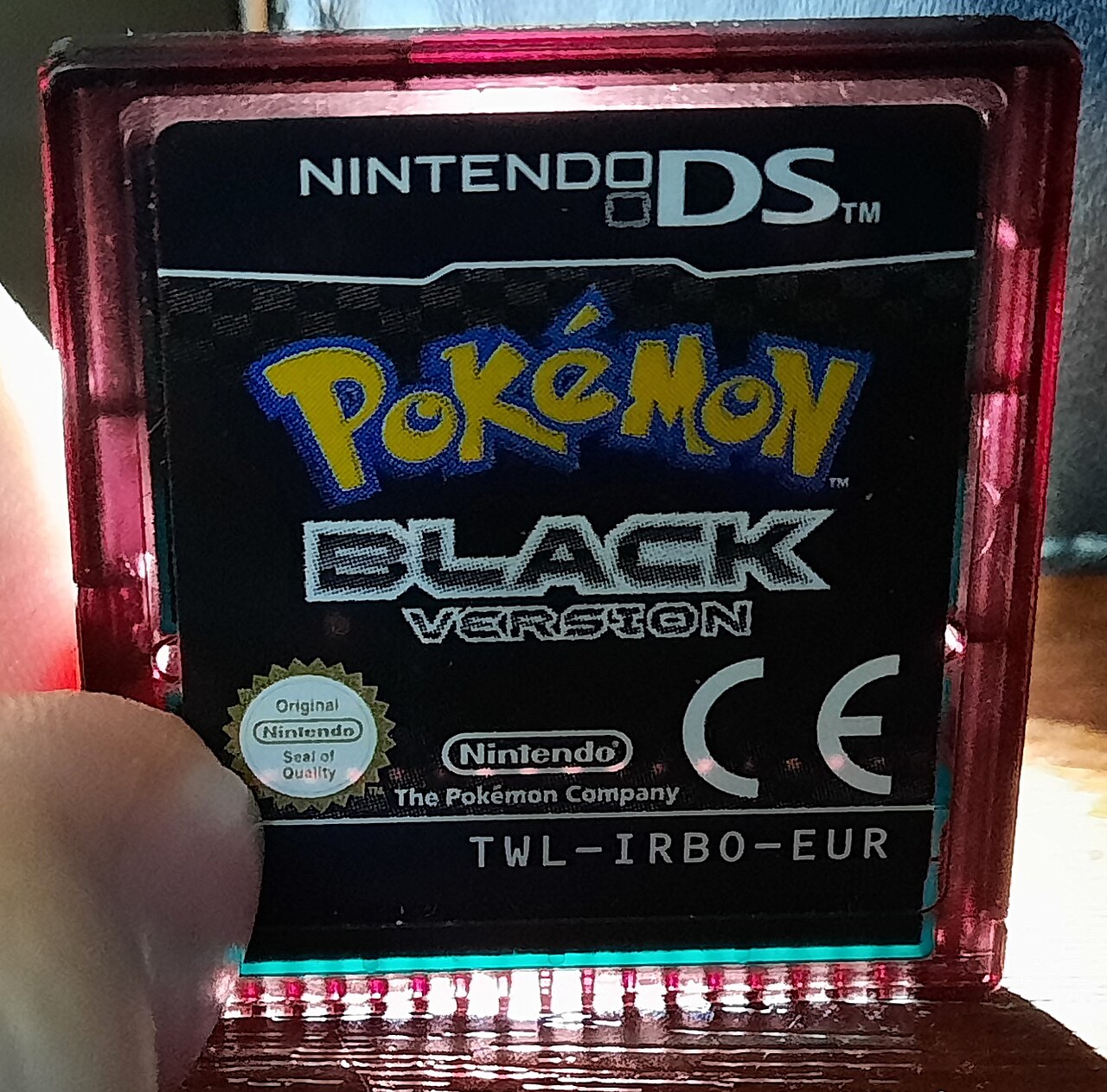
Pokémon Black Version and Pokémon White Version are 2010 role-playing video games developed by Game Freak and published by The Pokémon Company and Nintendo for the Nintendo DS. They are the first installments in the fifth generation of the Pokémon video game series, first released in Japan on 18 September 2010 and later in Europe, North America, and Australia in March 2011. The games introduced 156 new Pokémon, a seasonal cycle, rotation and triple battles, hidden abilities, and fully animated sprites, and were followed by sequels Pokémon Black 2 and Pokémon White 2 in 2012.
- Release date (Japan)
- 18 September 2010
- Release date (international)
- March 2011
- Developer
- Game Freak
- Publisher
- The Pokémon Company and Nintendo
- Platform
- Nintendo DS
- New Pokémon introduced
- 156
- Combined sales (as of September 2017)
- 15.64 million
Lore & Background
Pokémon Black and White take place in the Unova region, based on New York City. The player controls a young Pokémon Trainer who travels through cities and towns connected by Routes, capturing and training Pokémon to battle other Trainers while thwarting the criminal organization Team Plasma. The games feature a turn-based battle system where Pokémon can learn up to four moves, have six stats, and belong to one or two of seventeen types. The player must collect eight Gym Badges to challenge the Pokémon League, which includes the Elite Four and the Champion.
Reader's Guide
Pokémon Black and White are significant as the first fifth-generation Pokémon titles, introducing 156 new Pokémon—five more than the previous record holder Pokémon Red and Blue. They added a seasonal cycle that changes the environment and available Pokémon, as well as new battle formats: Triple Battles and Rotation Battles. The games also featured fully animated Pokémon sprites and a C-Gear for wireless connectivity. Upon release, they received positive reviews for gameplay advancements, though some critics were divided on Pokémon designs and felt innovation was limited. Commercially, they were highly successful: prior to the Japanese release, they sold 1 million pre-orders, became the fastest Nintendo DS titles to sell 5 million copies, and as of September 2017 had combined sales of 15.64 million, placing them among the best-selling Nintendo DS games behind Pokémon Diamond and Pearl. The games' sequels, Pokémon Black 2 and Pokémon White 2, were released in 2012.
Did You Know?
- Black and White introduced 156 new Pokémon, five more than the previous record holder Pokémon Red and Blue.
- The games' combined sales reached 15.64 million as of September 2017.
- Black and White were the first Pokémon games to feature fully animated sprites during battles.
- The Unova region is based on New York City.
The Unova Region & Narrative Framework
Pokémon Black and White transport players to Unova, a region explicitly modeled after New York City. The narrative follows a young Trainer navigating a landscape of interconnected cities, towns, and routes while battling wild Pokémon encountered in tall grass and water bodies. The central conflict revolves around Team Plasma, a criminal organization whose schemes the player must thwart. Eight Gym Leaders guard their respective cities, each specializing in particular Pokémon types, and defeating all eight unlocks the Pokémon League where the Elite Four and Champion await. The two titles—Black and White—tell largely the same story and can each be played independently, yet completing the full Pokédex requires trading between them. Items like Hyper Potions, Antidotes, and Revives are available in Poké Marts, while Technical Machines teach new moves and Hidden Machines enable traversal, such as Surfing across water. The region's urban inspiration gives Unova a distinct identity within the franchise's growing map of fictional territories.
Gameplay Innovations & New Features
The fifth generation brought a wave of mechanical and visual upgrades. Black and White introduced 156 new Pokémon, surpassing the previous record set by Red and Blue by five. Combat expanded beyond standard duels with the addition of rotation battles and triple battles, while hidden abilities added a new layer of strategic depth. Visually, the games replaced static battle sprites with fully animated ones and introduced dynamic camera angles that shift to emphasize key moments in combat. The familiar day-and-night cycle inherited from Gold and Silver was augmented by a seasonal system, with the environment shifting appearance every in-game month. Dialogue presentation also evolved: traditional text boxes gave way to speech balloons hovering above characters, enabling multiple speakers to talk simultaneously. Japanese-language players gained the ability to see kanji on screen rather than being limited to hiragana and katakana. These changes collectively modernized the franchise's presentation while preserving the core loop of capturing, training, and battling Pokémon across the Unova region.
Commercial Performance & Sales Legacy
Before the games even hit Japanese shelves, Black and White had already amassed one million consumer pre-orders, a remarkable figure that signaled enormous anticipation. Upon release, they became the fastest Nintendo DS titles to reach five million copies sold. By September 2017, combined sales stood at 15.64 million units, placing them among the best-selling entries on the DS platform—just behind their predecessors, Pokémon Diamond and Pearl. The commercial momentum carried into 2012 with the release of Pokémon Black 2 and White 2, which extended the Unova storyline and gameplay on the same handheld. The initial pair launched in Japan on September 18, 2010, followed by European, North American, and Australian releases in March 2011. This staggered global rollout, managed by The Pokémon Company and Nintendo with development by Game Freak, ensured the titles reached a broad international audience and cemented the fifth generation as a commercial cornerstone of the franchise's history.
Critical Reception & Design Debates
Critics largely welcomed Black and White, praising the tangible advancements in gameplay mechanics and presentation. The new battle formats, animated sprites, and seasonal visuals were singled out as meaningful steps forward from the Diamond and Pearl era. However, reception was not uniformly enthusiastic. A faction of reviewers felt the games fell short of the innovation level fans had anticipated after the previous generation's changes. Pokémon design also sparked division; while some of the 156 new creatures were celebrated, others drew criticism for their aesthetic choices. Despite these mixed notes on individual design decisions, the consensus leaned positive, with the overall package—combining refined combat systems, a fresh urban-inspired region, and a compelling Team Plasma narrative—earning strong marks. The games' commercial triumph, selling millions worldwide, ultimately validated the design direction even where individual critics wished for bolder creative risks.
Gallery
Frequently Asked Questions
What is Pokémon Black and White?
Pokémon Black and White are two fifth-generation role-playing games for the Nintendo DS, created by Game Freak and released by The Pokémon Company and Nintendo. They debuted in Japan in September 2010 and arrived in North America, Europe, and Australia in March 2011.
What new features do Pokémon Black and White introduce?
The pair of games added a day-and-night seasonal cycle, triple battles, a party rotation system, hidden abilities, and fully animated battle sprites. They also expanded the Pokédex with 156 brand-new species.
How does the story of Pokémon Black and White end?
After clearing the Elite Four, the player confronts Ghetsis, the leader of Team Plasma, who seeks to free every Pokémon from human ownership. Defeating him and his ace Pokémon brings peace back to the Unova region.
Why is Pokémon Black and White considered important to the franchise?
As the first titles of the fifth generation, they shifted the series toward a modern, urban-inspired setting and a plot that openly questioned the human-Pokémon bond. They also paved the way for the 2012 sequels, Pokémon Black 2 and White 2.
What region is Pokémon Black and White set in?
The games take place in the Unova region, a fictional locale with its own distinct ecosystem that introduced 156 new Pokémon not found in earlier generations.
More in Pokémon video games 1-24
Spotted an error? Know more?
This is a living reference — every entry is fact-audited, and reader corrections feed straight into our audit queue. Suggest an edit · See this site's audit record